
-
Location
Plot No. A2-7801, Gidc Estate,
Ankleshwar
Gujarat , India 393002 - Call us at +919824486234

Product
Home / Product
Sucralfate (SLF)
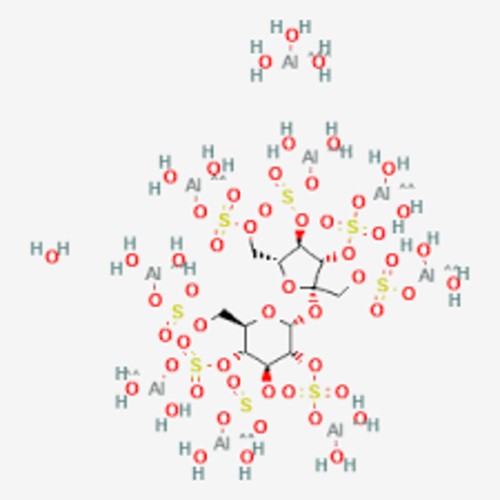
Product Overview & Molecular Structure
Sucralfate, chemically a complex of aluminum hydroxide and sulfated sucrose, is a unique gastrointestinal protective agent. By reacting with hydrochloric acid in the stomach, it forms a viscous, paste-like substance that binds selectively to ulcerated sites, creating a physical barrier against pepsin, acid, and bile salts. At Zeni Biotech, we manufacture and purify Sucralfate API at our state-of-the-art facility in GIDC Ankleshwar. We utilize optimized synthetic pathways to deliver a highly stable and exceptionally pure crystalline solid that complies with the most rigorous international pharmacopoeial standards.
Technical Specifications & Pharmacopoeial Standards
| Parameter | Specification |
| IUPAC Name | Basic aluminum sucrose sulfate |
| CAS Registry Number | 54182-58-0 |
| EC Number | 259-026-6 |
| Empirical Formula | C12H54Al16O75S8 |
| Molecular Weight | 2086.7 g/mol (average) |
| Appearance | White to off-white amorphous powder |
Zeni Biotech API Particle Sizing Grades
We offer three commercial grades to suit various finished dosage forms, engineered using advanced milling technology:
1. Coarse Grade (Standard): Ideal for large-scale production of oral suspension formulations.
2.Micronized Grade (D50 5-10 m): The industry standard for oral solid dosages, specifically compressed tablets, ensuring rapid dissolution and optimal mucosal adherence.
3.Ultra-fine Grade (D90 < 5 m): Engineered for high-viscosity applications and specialty gastro-retentive delivery systems.
Key Clinical & Commercial Applications
1. Gastro-Esophageal Reflux & Ulcer Management: Widely used in formulations for duodenal and gastric ulcers, as well as gastroesophageal reflux disease (GERD).
2. Stomatitis & Oral Mucositis: Formulated in oral rinses and gels to treat inflammation, radiation-induced mucositis, and mouth ulcers.
3.Pediatric & Geriatric Care: Essential for protecting sensitive mucosal linings in patients with high gastric acid susceptibility.
4. Veterinary Health: Highly effective for treating gastrointestinal ulcerations in small animals and equine gastric ulcer syndrome (EGUS) in horses.
Supply Chain & Ordering Information
-
Documentation Provided: Certificate of Analysis (CoA) per batch, MSDS, Particle Size Distribution (PSD) report, and GMP Compliance Statement.
Exceptional Ulcer Treatment
Sucralfate stands out as a trusted therapy for duodenal ulcers, gastric ulcers, and gastroesophageal reflux disease (GERD). By forming a protective barrier at ulcer sites, it shields the affected area from stomach acids and allows natural healing, supporting significant symptom relief for patients.
High Purity and Safety Standards
Manufactured to meet rigorous medicine-grade standards with a purity greater than 99%, Sucralfate contains minimal heavy metals (0.002%) and meets key pharmacological requirements. Its safety profile ensures suitability for pharmaceutical applications, particularly for individuals requiring sensitive treatment options.
Versatile Physical Properties
Available in coarse, micronized, and ultra-fine powder forms (with various particle sizes), Sucralfate adapts well to different pharmaceutical formulations. Its odorless and tasteless characteristics, along with ease of handling, make it convenient for both prescribers and end-users.
FAQ's of Sucralfate (SLF):
Q: How does Sucralfate (SLF) work in treating ulcers and GERD?
A: Sucralfate forms a protective barrier over ulcerated or inflamed areas of the stomach and duodenum. This barrier shields the tissue from acids, bile salts, and enzymes, allowing the area to heal more effectively while reducing irritation caused by acid reflux.Q: What is the recommended process for storing Sucralfate powder?
A: Sucralfate should be kept away from moisture in a tightly sealed container, stored at room temperature. Proper storage helps preserve its physical and chemical stability throughout its three-year shelf life.Q: When should Sucralfate be administered for optimal benefit?
A: It is generally recommended to take Sucralfate on an empty stomach, usually one hour before meals or two hours after eating, to maximize its protective action over the ulcerated mucosa.Q: Where can Sucralfate be used aside from its primary medical applications?
A: While primarily indicated for gastrointestinal ulcers and GERD, Sucralfate is also sometimes used under medical supervision for certain oral mucosal lesions and in related conditions where mucosal protection is required.Q: What are the benefits of using high-purity Sucralfate in pharmaceutical formulations?
A: The high-purity (>99%) ensures consistent efficacy and safety, minimizes potential impurities, and aligns with stringent pharmaceutical standards, supporting reliable therapeutic outcomes.Q: How is Sucralfate's physical form tailored to pharmaceutical needs?
A: Sucralfate is available in coarse, micronized, and ultra-fine powder forms, making it suitable for a variety of formulations including tablets and suspensions. This allows precise dosing and improved dispersion in liquid preparations.Product Specifications
| Minimum Order Quantity | 200 |
| Price | 2000.0 INR |
| Unit of Measure | Kilograms/Kilograms |
| Medicine Name | Sucralfate |
| Shelf Life | 3 Years |
| CAS No | 54182-58-0 |
| Molecular Weight | 2086.7 g/mol (average) Grams (g) |
| Chemical Name | sucrose octasulfate aluminum complex |
| Solubility | Practically insoluble in water; insoluble in ethanol; soluble in dilute solutions of strong acids and alkalis |
| Smell | No Smell |
| Usage | Treatment of duodenal ulcers, gastric ulcers, and GERD |
| Appearance | White to off-white amorphous powder |
| Storage | Keep away from moisture |
| Purity(%) | >99 |
| EINECS No | 259-026-6 |
| Boiling point | Not applicable |
| Grade | Medicine Grade |
| Physical Form | Powder |
| Taste | Odorless |
| HS Code | 29400000 |
| Molecular Formula | C12H54Al16O75S8 |
| Melting Point | 98 C - 101 C |
| Heavy Metal (%) | 0.002% |
| Type | Other |
| Particle Size | Available in Coarse, Micronized (D50 5-10 m), and Ultra-fine (D90 < 5 m) |
| Ph Level | 4.0 - 6.0 |
| Structural Formula | Complex of aluminum hydroxide and sulfated sucrose |
| Loss on Drying | 10.0% |
| Delivery Time | 10 Days |

ZENI BIOTECH All Rights Reserved Developed and Managed by Tradeindia .